Tuesday, January 9, 2018

Angevin # 5: Henry II Part 3: The Juggernaut Marches On


King Henry II Plantagenet was set to bring his new country in line and into profitability. But this was a country he knew little about compared to his holdings in France or of french politics and culture. Research, and mental preparedness was needy before he could rule effectively. He called upon scholars, philosophers, and other learned men from all over his new country to attained his roving court. As a friend of his would say, "everyday is a school day in Henry's court." I say roving because the king never stayed in the same place more than a few days. His first few months, though it was winter, he traveled throughout England; attending hunts at his or other nobles forests, being hosted at various town and city holiday festivals, feasting with his new subjects, and observing local lords courts. He inquired about every detail; wanting to know the concerns, customs, policies, traditions, rivalries, trades, cash crops, etc., of every locality and its lords, of every corner of the English realm, taking note but never intervening. And he was a remarkable student of it all, in and out of the classroom, absorbing everything and forgetting nothing or no one. When he felt he was ready, he called on all the magnates and barons, minor lords and landed knights, to a great attendance of his court in April of 1155. There he had them all swear fealty to him and his two sons, 1 1/2 year old William and new born Henry. King Henry II presented himself as the true heir of King Henry I, and said he was determined to rule in the law and order style of his grandfather, who was known as the "Lion of Justice."
 
A number of immediate reforms to put an end to the last remnants of the civil war were declared at the attendance to show Henry was serious about exerting his authority and bringing the country back to the rule of law. His first decree was to have all unauthorized castles, also known as adultrine castles, demolished. If it was built during the years of the Anarchy without the written consent of either King Stephen or his mother Empress Matilda, it was to come down immediately. Also, in respect to and in the spirit of the original treaty of Winchester, any foreigner (non English, Norman, Scot, or Welsh) that had been granted land and title in England by Stephen or Matilda was stripped of those privileges and given compensation (paltry as it may have been). They were also ordered to leave the country unless they submitted themselves under the direct employee of the King or one of the magnates as a household knight or counselor. Many Flemish and French mercenaries, brought to England by Matilda or Henry, were enraged and felt betrayed, but had no recourse as the Count of Flanders was an ally of Henry and the French nobility did not like the idea of their own knights having a divided loyalty between England and France. Finally he made assurances to those who fought for King Stephen that their positions were still secure as long as they show him the same loyalty they had shown Stephen. To further bring about the peace among his nobles he arranged a number of marriages between rival houses.

St. Thomas Beckett
With the last visages of the Anarchy out of the way king Henry saw that his attention needed to be divided in two between re-establishing the authority of the crown both internally and externally; a cementing of royal authority and rule of law through a court and justice system and a show of power and determination for surrounding rival nations. Foreign diplomacy and military deployment and logistics would require a personal face, so he would need help with the internal work of law and order through writ of the crown. He turned once again for thoughts on legal authority and advise to the church. The arch bishop of Canterbury, Theobald of Bec, helped Henry chose a council of men to minister the internal workings of the government To head this group Theobald recommended his personal clerk and pupil, Thomas Beckett; a young man of modest upbringing, being the son of a landless knight and a merchant's daughter, who had excelled in ever task the archbishop had ever given to him. Beckett would bring tireless proficiency and effectiveness to the job and would quickly became a great friend and confidant of the king's. Beckett's life, career, and downfall will be the subject of the next post, so for now, with internal governance well in hand lets get back to Henry's international show of power.

Prince Owain Gwynedd, King Malcolm IV, and Prince Rhys ap Gruffydd

Being a new ruler Henry knew full well that this was the time other kings would size him up and scheme on whether they can take advantage of this transition of power and time of re-building. First and foremost of these threats would be the King of France who would not have forgotten how Henry humiliated him. Henry needed to quickly show he was in full control of the borders of his new domain and that meant bringing England's borders with Wales and Scotland back to per-Anarchy positions; the late King David of Scotland and two prominent Welsh lords had used the chaos of the Anarchy to gain territory from their English rivals. By tackling these border issues Henry would not only shore up his territory and show a willingness to exert absolute control of his borders, but by showing concern for the security of these areas he would win the support of two of the most militant groups of land holding lords in the realm, the Northern Barons and the Marcher Lords.

Pre and Post Anarchy Wales
 Wales was by no means a unified country in the traditional sense; the ruling families had a unique dynastic scheme that for generations pitted all male family relations against one another and very rarely was the country under the rule of one king. Brothers and cousins of the ruling families (which changed names periodically because of shifting marriage allegiances) would split their territory up among heirs, making each a Prince of his own realm, and than continually fight to assume the others territory into their own; creating a sort of survival of the fittest motif to see who would come out as head of a family. Again, only a handful of times in Welsh history would one "Prince" ever gain enough power to be declared King. But one thing that would bring the various Welsh nations to unity or at least non-aggression with one another was their mutual hatred for the English, be it the Saxons or the Normans. After William the conquer had defeated the Saxons, the ones he was most lenient with were those on England's mountainous western borders with Wales. He gave those Saxon lords willing to accept his rule, and Norman knights willing to accept the challenge of establishing households in hostile territory in order to be made lords in this new land, crate-blanch to build up their own private armies and castles on those border lands. From then on they became known as the powerful Marcher lords, constantly in conflict with the Welsh over trade routes, territory, and all other manner of disputes; and the kings of England for the most part turned a blind eye to however these lords dealt with their Welsh rivals. In fact, with a few exceptions, the Marcher lords were allowed to remain mostly neutral in the Anarchy do to the nature of their positions, but those that did chose sides were highly valued as their armies were seen as the most battle hardened. It was those armies being missing that allowed the Welsh to make tremendous gains on the south cost and north eastern mountain passes, under the command of the two most powerful of the Welsh Princes, Owen Gwynedd of the realm Gwynedd and Rhys ap Gruffydd of Deheubarth.

Gwynedd
Henry went after Gwynedd first, being relatively close to the Scottish border he wanted to make an impression with the Northern Barons and the King of Scotland whom he planned on dealing with later. Through surprise Henry quickly regained all the territory that had been lost, however he would find his press into the interior of Gweynedd was ground to a halt. Henry had the idea of punishing Owain's opportunism by taking the province known as Rhuddlan, and to take Rhuddlan all one need do is take the castle of Twthill. Owain knew if Henry finished moving the much larger English force and established a siege of Twthill the castle would not last long and to remove English troops by that point would be near impossible. Henry had split his army in two to cover the ground faster; his infantry and bowman took the coastal route to pillage the fishing villages for food and scare the locals, while his knights, sappers, siege engineers, and other specialized forces traveled the forest route to collect supplies for building the siege engines and encampment for when they got to their destination. The thought was it would make for too easy of a target to drag such equipment all the way from an English town to Twthill, that the regular soldiers could distract Welsh forces as the rest of his forces gathered everything on route to be built on site, all with the protection of the elite Norman mounted knights. Owain did not take the bait, he ambushed the forest caravan in Ewloe (now known as Flintshire) and that being in a forest the mounted knights had little room to maneuver and be as effective against the guerilla fighting Welsh. Henry's forces retreated back to their regained territory. Owain saw his victory over the much superior force as divine protection:
"We are supported by divine assistance, we are far inferior to the English; and they, by their behaviour, have made God their enemy, who is able most powerfully to avenge both himself and us. We therefore most devoutly promise God that we will henceforth pay greater reverence than ever to churches and holy places."
 Henry, though, would not let the idea of punishing Owain go lightly, and hatched a dangerous scheme. He would continue to build up forces along the Gwynedd border and engage in small skirmishes, even committing himself and his personal troops to a folly of a battle at Crogen. There, in torrential downpour, his vanguard took heavy losses and he himself almost fell but for Hugh de St Claire, constable of Oakwood Castle, taking a spear in the chest meant for the Henry. Again Henry retreated, but though a loss and a tremendous gamble, it had the desired effect; distracted by the English aggression and tempted by the idea of a counter offensive, Owain and his men over committed themselves to the north eastern border area leaving the southern border with fellow Welsh Prince Powys open for attack. Flush with cash and equipment on loan from Henry, Powys took the oppurtunity to seize a sizable chunk of Gwynedd for himself; ironically, it was as much territory as Owain had originally taken from the English during the Anarchy. The message was received, and while no formal truce or peace treaty was signed, Owain nor his heirs would step foot into English territory and had even given verbal commitments to come to the military aid Henry if called.

Deheubarth
While Henry's campaign in Gwynedd had mixed results, his campaign in southern Wales, which started right after the events of Ewloe forrest, was more of a clear success. In 1063, one of the  pre-William the Conquror original Marcher Lords, Bernard de NeufmarchĂ©, had lead a resoundingly successful campaign against the southern Welsh who he accused of banditry and piracy. The conclusion was the defeat of Rhys ap Tewdwr, Prince of Deheubarth at the time, at the battle of Brecon, which resulted in a number of Marcher lords assuming power along the entire Welsh southern coast. But, as stated before, with some of the Marcher Lords' forces being dragged into the Anarchy, much of that territory was lost to his grandson Rhys ap Gruffydd; and like Owain made a couple of inroads into England itself on the extreme southern border. Again Henry, using surprise and lighting speed drove the Welsh from English lands, but this time instead of invasion Henry used coercive diplomacy to bring Deheubarth to heel. Henry posted a large military force on the border with Deheubrath, then let it be known that he intended to support all who have lost territory during the years of the civil war to return southern Wales to the previous status quo. Deheubrath, pre Anarchy was tiny, and had used the confusion to not only take the Welsh lands from the March Lords but made many surprise gains against nearly all its neighboring Welsh provinces, quadrupling its territory. Faced with the prospect of all his grandfathers old enemies coming to destroy Deheubrath with an English army at their back Prince Gruffydd sued for peace with Henry. Henry demanded the entire southern coast back into the hands of the Marcher lords and that English Lord Walter de Clifford be given the castle of Cantref Bychan, inside Deheubarth, to act as a liaison to the English crown. Once things were finalized and settled, King Henry "retreated" from involvement in southern Wales. Lord Clifford made a half hearted attempt to seize one of Gruffydd's castle at Cantref Mawr. Prince Gruffydd appealed to King Henry but after days of not receiving any response took matters into his own hands and drove Clifford not only from Mawr but out of Bychan as well, a surprising victory to the Welsh. But soon the Prince would realize it was all an entrapment. Henry responded to the attack claiming that the Prince had broken their pact and if he had waited just a few days more he would have reprimanded his subject, Lord Clifford, himself. Lord Clifford for his part was "punished" by not being able to reclaim Bychan, but Henry demanded compensation for the Prince's breaking of their treaty, the compensation was that the Prince's son, Hywel was to be hostage to Henry and that Prince Gruffydd was now a client of the English crown, still ruler of Deheubarth but subject to Henry.
 
King David I and King Malcolm IV

Scotland in comparison would be a cake walk for Henry, having already displayed his girt in Wales and with the powerful King David dead, succeeded by the young sickly and impressionable Malcolm IV. Though David had been allies of Matilda and Henry, the Scottish were not keen on just giving up any of the lands they had taken from King Stephen and their hated rivals, the English Northern Barons, during the Anarchy; David and his lords viewed those occupied territories as payment for their allegiance with Henry. But David knew that that argument may be on shaky grounds with the church legalists that Henry had a reputation for having on his side. So before he passed away, in an effort to legitimize continued Scottish occupation and control of the captured lands, instead of annexing them into Scotland, David named his grandsons as the rightful English lords of those provinces (their father having died years earlier). To his eldest grandson and heir, Malcolm, he dubbed the Earl of North Umbria and of Huntingdon; and his younger grandson William he dubbed the earl of Cumbria. But the newly crowned Malcolm had not inherited his grandfather's mettle. Small of frame, constantly ill, not as sharp or as politically ambitious as is grandfather, and reliant on a bevy of advisors, Malcolm was more playing at king than being one. And whats worse for his loyal subjects, he grew up enthralled and in awe of the romanticized tales of the famed Norman knights: of them riding alongside his grandfathers warriors against the "vile usurper" King Stephen or conquering the holy land from the heathen Saracens. Word of the boy kings fancies reached Henry, and Henry in turn was determined to use it to his advantage. He used his recent Welsh campaigns to intimidate any Scottish noble in his way to befriending the boy. He offered his tutelage in what it means to be a ruler, and most of all he promised to groom Malcolm into becoming the thing the boy wanted most, a knight. Henry manipulated the boy by dangling the prospect of knighthood like a carrot on a stick; that all Malcolm had to do was let Henry take him under the elder statesman's wing and heed his lessons. And for Henry's first lesson, the importance that a king demand that his vassals pay him homage and if they do not, to met out appropriate punishment. Henry used the example of his great audience back in April 1155, were all land holding lords of the English realm were expected to come to pay their respect and acknowledge Henry's lordship over them. However, as Henry pointed out, Malcolm and William had not attended, and being Earls of English lands they had committed a grave breach of protocol which must be punished. Malcolm not wanting to disappoint the man he was counting on dubbing him a knight, submitted to whatever punishment his mentor thought appropriate. Henry stripped him of the earldom of North Umbria and William of the earldom of Cumbria, but "graciously" allowed Malcolm to retain the earldom of Huntingdon as a gesture of "forgiveness". The Scottish lords watched helplessly as their king was tricked into giving up two large chunks of land they had fought the Northern Barons so long for control over. And to make matters worse Malcolm gave a promise of military aid to Henry whenever he called, in hopes of winning his coveted knighthood from his mentor. 

One thing that was made clearly apparent in all this was that King Henry Plantagenet was not only focused, but seemed tireless. He preferred hunting and travel cloths to formal wear no matter what the day called for and gave little to no time to pomp and prestige. No fatigue what so ever showed, nor attention diminished, as he bounced from one end of the country to the other, juggling foreign affairs with Wales and Scotland, at the same time convening with his new right hand man Beckett in their partnered efforts in forming the laws, agencies, appointments, and institutions, that would be the pillars of a stable internal English government. Not even the death of his first born, 3 year old William, was enough to slow him down; in fact the tragedy seemed to spur him on in his work even more fervently. The question on everyone's minds at all time was were would the King pop up next. A dispute between two lords over taxing boundaries, a local knighting, a convening of court to dispense justice, the king showed up everywhere ready to work from dawn till dusk. And if not the king than one of Beckett's appointed agents, was assigned to administer decrees in the king's name. With England now secure and the impressive and brilliant Beckett running the realm with clockwork precision (much to the ire of the ever ambitious Queen), Henry could now go back to France in confidence in his ability to expand his power and territory while keeping King Louie of France at bay.

Castle Chinon
 While Henry was away dealing with Wales and Scotland little had changed in France: he had a non-aggrssion pact with the Count of Flanders stating that neither one will help nor hinder the other in their conflicts with King Louie; he officially recognized Theobald V as Count of Blois, instead of just a stand in while he was away; and even had a uneasy peace treaty with Louie in 1154 where Louie formally recognized Henry's control of the cities of Vernon, on the northern end of the Vexin, and Neuf-Marche on the borders of Flanders in exchange for rudimentary acknowledgment that Louie was his King in France, though still Henry would never give official homage in person. In 1158, Henry moved his family back to France: 3 year old Henry, 2 year old Matilda, new born Richard (yes, that Richard), and his queen Eleanor pregnant with their 5th child Geoffrey. While the family stayed in his ancestral home of Angers, Henry would build the impressive fortress of Chinon to be his administrative and treasury center on this side of the channel as London was for the otherside.  The expansive castle was built from the ruins of one of the castles of the legendary King Clovis I and the symbolic importance of Henry setting up his base of power where the first ever king of the Franks once ruled from was not lost on any in France. Standing on top of cliffs over looking the Vienne River, in the heart of the borderlands between his County of Anjou and Eleanor's Duchy of Aquitaine, protected on three sides by cliffs and rushing water it was one of the most impressive bastions in all of France. William of Newburgh would write upon its completion:
"its strength was such that nature seemed to vie with human art in fortifying and defending it"
Mont-Saint-Michel
 But even with his new capital complete, with messengers and packages running back and forth between Chinon and London, night and day, his realms in France and England running like well oiled machines, Henry's ambitions would never rest. Before his next territorial target could be sought he needed to shore up the peace between him and King Louie, so he went into negotiations with the French King in the coastal city of Mont-Saint-Michel in the neutral Duchy of Brittany. The terms of the peace were Louie would formally recognize the Duchy of Normandy's control of the entire Vexin, in exchange Henry's son Henry (3) was betrothed to Margaret (1), Louie's eldest daughter with his 2nd wife. At last peace between Normandy/Anjou and the French crown seemed possible. Henry was now free to set his sights on his next target, the very Duchy he was sitting in for the negotiations, Brittany.
The peninsula duchy of Brittany, like Normandy was starkly different than the rest of France in custom and dialect. But where Normandy was a hybrid of Nordic and French culture, Brittany had a Celtic and French mix due to their strong ties to the Irish and Welsh. Largely independent from the rest of France do to geography it was also not a very centralized province either, the Dukes of Brittany having little real control over their vassals. But currently the entire province was in the midst of an on again off again civil war since the death of Duke Conan III in 1148. Henry had decided to throw his support behind Conan IV and use him as a puppet ruler of the peninsula. In exchange for Normandy and Anjou support for his claim Henry demanded Nantes, one of the Duchy's largest cities, be returned to his brother Geoffrey, as it was Geoffrey's by royal appointment. If you recall, Louie had offered Nantes to Geoffrey in exchange for betraying Henry. The current Count of the city, Hoel of Cornwall, had seized the city after Geoffrey never showed up to take up the position because he had been detained first by Theobald V and than handed over to his brother. Hoel was Conan IV uncle, so Conan refused Henry's offer. With financial and material support from Henry, Geoffrey started an insurrection within the city and overthrew Hoel. When Conan moved against Nantes to restore his uncle, Henry moved the armies of Anjou, Normandy, and Blois in, under the pretext that Conan was committing treason against the French crown by attempting to remove a royally appointed count of the city. Henry's forces easily defeated Conan and declared Brittany under the protectorate of Normandy until such time an appropriate Duke could be named, i.e. when he decided which one of his sons he would name as Duke. As for Louie, not a word, neither an endorsement or condemnation of Henry's supposed defense of a royal appointment or of Normandy taking primacy over Brittany. The silence from Paris was deafening throughout all of France as the whole of the country was starting to truly fear the meteoric rise of Henry Plantagenet and his Angevin Empire.

Wednesday, December 13, 2017

The Angevin # 4: Henry II part 2: All Hail the King!

King Henry II as played by Peter O'Toole in "The Lion in Winter"
So when we left 20 year old Henry in the Autumn of 1152, through his political guile and strategical military gamesmanship, he become the undisputed master of nearly the entire western half of France; he was married to arguable the most powerful woman in the realm; had certain legal protections from the church; and cowed the King of France himself into truce. With his traitorous brother in his custody and King Louie defeated, licking his wounds, Henry set his sights on his last remaining enemy, his 2nd cousin, King Stephen of England. For 18 years now Stephen and Henry's mother Matilda had been locked in a Norman civil war for the inheritance of King Henry I, Matilda's father and Stephen's uncle. At stake was the Duchy of Normandy in France and the crown of the whole of England.
Robert of Glouchster and Empress Matilda
Matilda, and subsequently her son Henry had control of Normandy thanks mostly to the efforts of Count Geoffrey of Anjou, Matila's 2nd husband and Henry's father. But England proved to be a much tougher nut to crack for Matilda's forces lead by her half brother, Robert of Gloucester.


But before we see how Henry will finally end the stalemate lets have a look at four points of interest that have come about because of recent events:

1. The devious couple
Abbott Suger
As Henry's conflict with King Louie ended, behind closed doors and in whispered tones peasant and noble alike spoke of the unsavory nature that had brought them to this point. Abbott Suger's death, Louie and Eleanor's annulment, and Henry's marriage to Eleanor was looked at with new feelings of intrigue and fear of the new marital alliance. The circumstances of Suger's death and replacement was of particular interest. The news out of Saint Denis abbey was that he had died of malaria in the night; but some questioned that he had been fine the preceding days and that malaria had not been seen in the Seine River basin since the days of Rollo? The abbey monks used the fear of Malaria outbreak as the reason for the hasty funeral and burial. Then there was Bernard of Clairvaux's swift appointment; he was literally waiting in the wings when his name was put forward and pressed he just so happened to be at court the day news reach the king of his old family friend's death? And finally the controversial marriage, taking place so soon after the annulment, where most bishops would have had them wait. Though no accusations were ever made public in her time, many chroniclers and historians view Eleanor with a great deal of suspicion in regards to these events and believe that in an age of chivalry (and out of fear) no one of the time would have dared point in her direction without overwhelming evidence. She had made many friends and allies within the clergy during the year of preparation for and during her journey of the 2nd Crusade, including Bernard. It was known fact that she had developed a disdain for her husband and wanted a more politically active role. And the cathedral that the marriage took place was one in her territory, that her family had donated to over the years. The questions many historians ask now are: Did Eleanor conspire these events with Bernard or at least members of his entourage upon her first meeting of Henry, when he, Bernard, and Louie all met to negotiate? Did Eleanor have Abbott Suger, the man that was preventing her from leaving Louie, killed and his murder covered up? Was Eleanor behind the church's approval of Henry's political tactics? And if all this is true, how much did Henry know? The fact that he was at the Anjou's southern border with Aquitaine, and not at his family's castle in Angers, or his new territory of Normandy, and being not to far away from Eleanor's proposed meeting place suggests he may have had some forward knowledge. It would not be so far fetched of a member of a Plantagenet family that many have accused of being "of the devil."

2. The Vexin
You have heard me name the region twice during the last post, and it will be mentioned a couple more times before our Angevin adventure is over, but what exactly is the Vexin and why is it so important? The Vexin is a wide and lush plateau that connects the north eastern coast of France to the expansive Seine River Valley and Basin (which right in the middle of sits Paris itself). To the medieval noble or warrior, the Vexin's easy terrain, abundant fresh water sources, and fields of grains make it perfect marching grounds for a large military force; whether you are coastal raiders looking to strike inland, like Rollo and his vikings or a French King looking to exercise his authority over certain troublesome nobles like the Dukes of Normandy or the Counts of Flanders. Just how much strategic importance has been put on this area over the centuries is evident in the numerous castles or ruins of castles that dot the landscape. Louie losing the Vexin and Eleanor to Henry would spark a hatred for the Normans and Angevins, and particularly the Plantagenet family; and that hatred would continue down his bloodline into his children, grandchildren, and great grandchildren.

  3. The Norman Divide
The English civil war known as The Anarchy was more than an individual nation's civil war, it was a civil war within a multinational people. The Normans, since Rollo, have been a united people whether it was joint efforts under the Dukes of Normandy to undermine the French King's authority or their united campaign to topple the Saxons lords of England. Sure groups of Normans broke off to go claim fame and fortune else were in the medieval world; helping the Spaniards reconquer their lands from the Muslims, establishing the Kingdom of Sicily or one of the Christian Outremer nations, or hired as a formidable mercenary armies for one of the Italian city-states, but never had they fought each other on such a wide scale. This war rent of fissure in them, turning long time friends and allies against one another; but also bringing out the worst of ambition and greed in others, using the chaos to expand their own personal wealth and power at the expense of their fellow Normans. And since a good number of these lords held land in both France and England, the war started to have the effect of making individual Norman lords prioritize which side of the English Channel was more important to them. A political divide had started to create a cultural divide as the English Normans started to abandon their lands in France and French culture in favor of melding their Norman traditions with that of the Saxon peasantry of their English lands; including the slow transition of preferring to speak in the English tongue over the language of France. Even after peace would finally come this split starts to become more and more apparent as the decades and generations go by. By the end of John's reign in 1216 there will be two distinct people, the English and the French Normans. But the beginnings of this split will bring our next point....

 4. A Magnates' Peace
As I have stated before the civil war has been dragging on for almost two decades now and by this point many of the nobles and knights are just tired and want to get back to the work of making their lands profitable again. And as we just discussed above, some Normans do not see the point in dividing up their time, resources, and energy between their lands in England and their lands in France, especially in these hostile times. The magnates, powerful nobles who had armies of their own and lesser noble vassals under them, but were not necessarily part of either Stephen or Matilda's inner circle sought to lessen their roles and participation in the war. Especially when the two main protagonists, Matilda and Stephen, seemed to have lost some interest and had left the fighting to their children, Henry and Eustace. These nobles starting making separate truces with one another without the consent of their liege lords. Ranulf, the Earl of Chester and Duke Robert Beaumont of Leicester agreed to a non aggression pact, and that if either of them are forced to fight the other they would use no more than 20 knights each against each other. John Marshal, Baron of Marlborough, and Earl Patrick of Salisbury created a binding truce by John divorcing his wife and marrying Patrick's daughter. Other such and varies arrangements were being made all over England between the lords of places like Derby, Chester, Lester, North Hampton, and more.

King Stephen and his son Count Eustace IV of Boulogne
 And so getting back to our story, the leaders of the factions needed to do something fast or an unintended piece would accidentally break out, perish the thought. His father dead, his mother Matilda's right hand man, Robert of Gloucester dead, and Matilda herself, one foot in the grave, retired to a priory, Henry took up sole leadership of the claim for the English crown and his first act would be a bold and unexpected deployment. In the midst of terrible winter storms Henry was to bring an army across the English Channel in January of 1153, to relieve his families supporters. Because things had settled down in France and the French Normans were trying to rebuild; none wanted to commit their own forces and instead gave Henry enough to fund a large mercenary force. But upon arrival, before he could start a new offensive against Stephen he had to get his own house in order.
There had been much infighting since Robert of Gloucester's death and many were not happy with Ranulf of Chester, who had switched sides a couple of times during the coarse of the war, bullying his way into a leadership position and having a non-aggression pact with Duke Robert Beaumont of Leicester. Henry re-excreted his control over his forces, making Ranulf share second in command with Hugh Bigod, Earl of Norfolk. With that settled the next step was to rescue two of his mothers most loyal supporters from starvation. If you recall King Stephen had laid siege upon Wallingford castle while Henry was occupied with the forces of King Louie VII of France. Roger Fitzmiles, Duke of Hereford, and Brien Fitzcount, the bastard half brother of the Duke of Brittany, had held the castle for about a year now, having repelled Stephens forces from taking the castle on a number of occasions. However, food was running out and they would soon face the choice of surrender or starvation. Henry deceived Stephen's forces in thinking he was about to lay siege to the castle of Malmesbury. When Stephen rode out to intercept Henry he took the army surrounding Wallingford with him giving Roger and Brien the relief they needed to resupply and regroup. As for catching Henry's smaller force in the open, Stephen would have no luck as Henry would skillfully keep the river Avon between them. With the winter weather getting worse and Stephen realizing that Malmesbury was never in danger and that he was back at square one in Wallingford, he agreed to a temporary truce with Henry where both would wait out the rest of the winter before resuming hostilities. Henry used the truce to travel north and there brokered a deal with the powerful Robert Beaumont, delivering the Duke of Leicester's sizable force to Henry's cause. This was a massive blow to Stephen as Beaumont was head of nearly a quarter of his army and he had relied on the Duke to be a bulwark against any possible future aggression from the King of Scotland. Again, like in France, Henry had combined military trickery and political opportunism to turn the odds against his enemy.

Stamford and Ipswich
But spring would show why Stephen had held out all those years against Henry's uncle Robert. During the Easter season Stephen would when dual victories only days apart; the rebel city of Ipswich, whose forces were being led by Hugh Bigod fell and the Earl taken into custody. Stephen then broke Henry's siege of Stamford, sending Henry into a full retreat but again unable to catch him. The tide of the war was again turning in Stephens favor. Henry and his forces were at a stand still; besides making a few small scale raids into enemy territory Henry could not find a foothold to make any meaningful gains. Just as Stephen was riding this high and planning his next move his 26 year old son and heir Eustace died suddenly and mysteriously in August. No one knows exactly what happened but many historians believed he was poisoned in his sleep, but by whom is a matter of contention; whether it was an agent of Henry's or a member of the clergy as Eustace was openly hostile to the Church's involvement in governance and would raid and burn cathedrals and monasteries to plunder them for funds to pay his military efforts against the Plantagenets. No one really grieved his death except his father who William of Newburgh said:
"grieved beyond measure by the death of the son whom he hoped would succeed him; he pursued warlike preparations less vigorously, and listened more patiently than usual to the voices of those urging peace."
But as for the opinions of most of English and French, the Anglo-Saxon chronicler of Peterborough puts it:
"He was struck down by the wrath of God for he was an evil man and did more harm than good wherever he went; he spoiled the lands and laid thereon heavy taxes"
Wallingford Castle

 Stephen made one last attempt to end the war, he brought to bear nearly the entirety of all forces loyal to him to renew the siege of Wallingford castle, for once that fell it would open the way to a full on assault of the remainder of Henry's lands on the English side of the channel. The siege force was one of the largest ever seen in England and Henry feared all his efforts would soon come crashing down if he did not prevent the castle from falling. He mustered as much of his forces as he could in short notice, not able to wait for the new massive amount of men he had just acquired from his deal with Duke Robert Beaumont, and march to break the siege before it could possible begin. Just as Stephen arrived at Wallingford and started to set up his siege engines, news arrived of Henry's eminent arrival. He turned his forces around, this time determined to force young Henry into an open field battle. the two armies faced each other over a ford at the river Thames. But something remarkable happened, something you may have seen coming if you were paying attention to the beginning parts of this post.
The armies did not heed the calls to charge, they refused to fight and demanded that Henry and Stephen broker a lasting peace. For the next two months the armies stared down each other from either side of the river while King Stephen and Henry Plantagenet negotiated the terms of peace. So in November of 1153 the Treaty of Winchester/Wallingford was signed. While varies promises were made to release prisoners and exchange lands by both sides the main stipulations were that all foreign mercenaries were to be disbanded and sent home and Stephen would adopt Henry as his son and heir to the throne of England and Count of Bois, meanwhile Stephan's remaining son William would have the protection of Henry from all that would do him harm in retaliation against Stephen or Eustace and that William would be named Count of Boulogne. The treaty was oversaw by and given church binding by the arch-bishop of the cathedral of Winchester and Henry and Stephen sealed it with the kiss of peace. Satisfied Henry would personally escort 16 year old William to his new county in France and wait out the rest of the reign of King Stephen, acting as a mentor and advisor to the boy. For the next couple of months Stephen would would be setting his kingdom straight, preparing the kingdom for the transition of power; riding up to York to re-establish his authority with the northern barons and receiving pledges to be vigilante against the Scots, then riding to the Welsh borders and receiving reassurances from the powerful and militant marcher lords that they would remain vigilant against the Welsh. He even received the Count of Flanders as a guest in the city of Dover in the late summer to ask the powerful rival of the French king to keep an eye out if Louie would attempt to take advantage of his son William. But by then people started to notice a marked decline in Stephan's health  Nearly a year after the treaty that ended the war that plagued his entire reign, on October 25, 1154, King Stephen died to complications with an unknown "stomach illness", which historians believe may have been cancer. And so after the King's burial, next to his son Eustace in the Faversham Abby, and after the respected mourning period, on December 8, 1154 in Westminster Abby in London, Henry Plantagenet, Duke of Normandy and Count of Anjou and Bois, was crowned King of England and the powerful Eleanor, Duchess of Aquitaine was crowned his Queen. 22 year old King Henry II was now one of the most powerful men in all of western Europe, having as much if not more money and man power as the King of France and almost as much territory as the Emperor of the Germanic Holy Roman Empire.


Thursday, December 7, 2017

The Angevin # 3: Henry II Part 1: Breed and Groomed for Power

"Born of the Devil"

Henry Fitzempress Plantagenet, also known as Henry Curmantle, for his scorn for long flowing robes usually worn as a symbol of office at formal occasions, opting instead for a shorter less voluminous robes, was born in Le Mans, on  March 3, 1133. His parents' marriage was meant to assuage the hostilities between the Norman lords and the lords of Anjou, a long standing rivalry for dominion over parts of North Western France.
Anjou was a fertile land known for its lush fruits and wines, but whose people had developed a unsavory and scandalous reputation among the peoples of the surrounding lands. The Normans in particular had a disdain and distaste of the Angevin whose lands laid in the midst of the Norman controlled territories of Normandy, Blois, and the Norman aligned Brittany. The Angevin had been seen by outsiders as degenerates and hedonists, who "desecrated churches and murdered priests in the night", and who "ate like animals, devoid of table manners." The gossip around France was severally exaggerated but not baseless, as the lords in Anjou had a continuing disputes with the Catholic church about several issues which had led to some isolated incidents of churches and monasteries being burned and clergy being arrested and executed. The French Kings would always have to step in and mediate the latest standoff, but it was a far cry from the accusations of witchcraft and devil worship the rumor mongers spread among the peasantry. As for the other accusations, with Anjou being so bountiful the Angevin were quick to festival and feast than normal, using even the simplest occasions to make celebration. But to other regions who were more prone to lean harvests, and again, especially to the Normans who are use to harsh winters, this was seen as a sinful extravagance and waste of food. Demonizing of Anjou was at its peak when it came to speaking of the Counts of Anjou. The Counts, ruling for many generations from their castle in Angers, had a reputation of being conniving and
Castle Angers and the Count of Anjou coat of Arms
untrustworthy, political snake charmers who had great and terrible tempers if their charming tricks did not work. The Counts were "Born of the Devil" as the chroniclers of the age liked to say, often citing passages from the family legend that the first Count, Fulk I,  had taken a Moorish pagan enchantress, Melisune, as bride, and after giving him a number of children she did not intend on raising as christian, she was forced to attend a christian mass to baptize her and her children. The story goes that the words of the bible were "like madding poison to her ears", so she flung herself out the window and down a cliff. Instead of trying to squelch the story the Counts, including Henry and his son Richard the Lionheart, would sometimes revel in it, using it as an excuse for some of their more volatile behavior.

King Henry I and Geoffrey Plantagenet
 After years of rivalry between the Norman lords, lead by the Dukes of Normandy and Angevin lords lead by the Counts of Anjou, Henry I, Duke of Normandy and King of England struck a truce with Geoffrey Plantagenet, younger brother of Count Fulk V, that in exchange for raw material and food surplus from Anjou the Normans would throw their military and political weight behind the Angevins in disputes with other French lords (including the King) who may look to take advantage of Anjou, since Fulk was leaving on crusade to the holy lands, taking much of his army with him. To seal the agreement Henry agreed to marry off his daughter, Empress Matilda, widow of Emperor Henry V of the German Holy Roman Empire, to Geoffrey in 1128. Fulk, not intending to return to France, gifted Anjou and the title of Count to his brother Geoffrey as a wedding gift (Fulk would eventually be crowed King of Jerusalem). Meanwhile, a few years earlier, King Henry's son, William, had died during the sinking of his ship in the English channel leaving no clear heir to the throne of England or the Duchy of Normandy, eventually causing the civil war known as The Anarchy after Henry I's death in 1135 (see the last article for a quick recap). And so Henry Fitzempress, heir to the County Anjou, and potential heir to the Duchy Normandy and throne of England was born just before war broke out and was raised during one of the most chaotic times in western Europe. He was left with tutors and nannies, or attended various French courts, for most of his younger years, as his parents were off fighting to press his mother's claims on inheritance; Matilda in England and Geoffrey in Normandy. However, after gaining control of Normandy in 1146 through combination military strategy and diplomatic guile, Geoffrey returned to castle Angers to take personal charge of his son's education. In his father Henry would not find a more able teacher in the art of court intrigue; as historian Dan Jones puts it, "Twelfth-century French politics was violent, changeable and rough, and Geoffrey was an adept player."

Henry's Political Debut
King Louie VII and Eleanor of Aquitaine
Henry, now a handsome stocky red headed teenager of 13, followed and watched his father ride across parts of South and eastern France, making deals, forming alliances, and projecting power and authority with some of the most powerful men of the realm. On this education tour it was noted that Henry was not as refined as his mother, nor was as charming as his father, but was noticed as highly intelligent, had a talent for administration and logistics, and had a piercing stare that intimidated most. In fact the boy seemed to have developed a flare for the dramatic, making strategically timed bullying outbursts if negotiations were not going his way. He garnered a reputation for the famed Angevin temper, when in fact he had become quit adept at acting out varies levels of outrage or indignation to what the situation called for. But him and his father's political skills would be put to the test with the arrival of King Louie VII, returned from a trip to the holy land. Louie having been informed of what had gone on since he left grew concerned at the amount of power Geoffrey had acquired in his absence, especially in his plans to name Henry as Duke of Normandy. To seal the claim for Normandy, Geoffrey offered Henry's hand in marriage to Louise's new born daughter, Alix (yes, I said new born, a 13 year old would be betrothed to a baby. It was not too common but it did happen occasionally, however, actual marriage in these cases would not happen until the younger of the two had reached mid teens).
Bernard of Clairvaux
Remembering their long time dispute with the Angevin and fearing an Angevin influence on the king's court, the clergy, lead by the powerful Abbot Bernard of Clairvaux, campaigned against the union and used a convoluted family tree to argue against it; with Bernard writing the king,"I have heard that the Count of Anjou is pressing to bind you under oath respecting the proposed marriage between his son and your daughter. This is something not merely inadvisable but also unlawful, because apart from other reasons, it is barred by the impediment of consanguinity. I have learned on trustworthy evidence that the mothers of the Queen and this boy are related in the third degree. Have nothing to do with the matter." Outraged by the set back, Geoffrey threatened to proclaim Henry Duke of Normandy without the king's consent and in response King Louie threatened to name King Stephen of England's son Eustace as Duke. It would be Henry who would prevent a war between the Angevin and the crown, as he entered Louise's court in Paris and negotiated with the king on his father's behalf. It was seen as a brazen move, as technically he had no standing, he was not a lord, just heir to one, and had no army or land of his own. Henry struck a deal with Louie, that in exchange for a renewed oath of fealty to the French king from his father and the promised gift of the Vexin, a strategic valley that connects the Norman lands and the lands of the powerful Count of Flanders
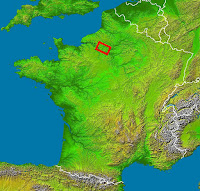
(modern day western Belgium and north eastern France) to the King's personal domain, Louie would name Henry Duke of Normandy, but only in the understanding that it was an advance on the eventual inheritance from his mother Matilda and that Geoffrey and the County of Anjou had no primacy over Normandy. By this King Louie had just declared for Matilda on the French side of the Channel, helping defend against all claims from King Stephen of England and his family. The decree was finalized by Bernard, Geoffrey, and Louie, and all sides seemed content. It was a tremendous feat for one so young and not yet into his inheritance; for the first time the French nobility took awed notice of this skilled young man, especially the kingdom's young and ambitious firebrand queen, Eleanor. In fact it is suspected by some chroniclers and historians that Eleanor is the only one that knew just how clever the boy had been, more on that in a bit.

It is at this time, 1148, as I stated in the previous article that Henry gets his first crack at a military campaign. Against his mother's wishes and ignoring the advice of his uncle, Robert of Gloucester, who was the head of Matilda's forces in England, Henry will take a small mercenary army and try to capture the region in southern England known as Wiltshire. It was an unmitigated disaster that was made all the more embarrassing to Matilda that her enemy (and cousin) King Stephen took pity on her boy, and gave him money to go home. But instead of running with his tail between his legs he used that money to reignite his mothers waning alliance with King David I of Scotland. David would knight the boy and would comment to Matilda and Robert of Gloucester what a remarkable young man Henry was. Some of his pride restored Henry returns to France with his mother, both looking to abandon large parts of the English campaign in favor of consolidating the gains made against Stephen's supporters in France.While this was going on there was much distress within the royal house of Louie VII Augustus; his marriage to the young and beautiful Eleanor was not a happy one. Louie had married the Duchess to obtain direct control of her inheritance, namely the large, bountiful, wealthy, and artistic Duchy of Aquitaine.
He and his father had for years been working on consolidating power back into the hands of the crown, and trying to reign in more independent minded nobles. He had made significant diplomatic successes with the Duchies of Burgundy, Champagne, and Toulouse, and was engaged in an on and off war with the Count of Flanders. But his marriage to Eleanor and subsequent acquisition of Aquitaine was a major coup in the efforts to centralize power. But Eleanor was not the submissive bride Louie and his advisors hoped she would be; Louie tried to play for time, hoping that his wife would settle down in her ambitions but it only made her more frustrated and power hungry. The cracks in their union were evidently visible on their return from the holy land, as rumors swirled of scandal that had happened between Eleanor and her uncle Prince Raymond of Antioch; and that events that transpired their hastened Louie's itinerary. So Louie returned to Paris in not the best of moods when he learned of Geoffrey and Henry's efforts to embolden Angevin power, efforts that could undermined his own. Whats worse is Eleanor had yet to produce a male heir; two daughters had been born to Louie and Eleanor, Marie and Alix, and the 30 year old king was growing concerned about succession of the throne, especially seeing what was currently happening in England and his own backyard, Normandy. His nobles counseled him to get a divorce, that his lack of sons may be due to his marriage not pleasing to god. But his families long time friend and advisor, Abbott Suger of Saint-Denis, advised against divorce, that it would lose him Aquitaine and undermine his goal of centralizing power in France. His fretting about succession and marriage, his indecisiveness in the conflicts in Outremer and Flanders, and his inability to bring the whole of his country to heel without making major concessions disgusted Eleanor. A famed chronicler of the time, William of Newburgh, quoted her as saying she "married a monk, not a king." How very lady Macbeth sounding. So when Henry came to court in Paris to treat with Louie, Eleanor took notice. No one knows whether Henry and Eleanor had conspired the coming events together and if so was it from the very start of their meeting? Many are quit suspicious of Eleanor's involvement in the chain of events.

In the winter of 1150, Henry's father died, making Henry Duke of Normandy and Count of Anjou. Next came a series of events that would put most soap operas to shame and show the world just what a Machiavellian mind Henry (and perhaps Eleanor) had. 1151, Abbott Suger dies under mysterious circumstances; the body given funerary rights and buried with haste the next morning. The news barely had reached King Louis ear when portions of the royal court lead by Eleanor call for the king to place Abbott Bernard of Clairvaux (you remember Bernard, he help Louie and Henry work things out) as replacement in the advisory position. Bernard took to his new position quickly, claiming he wanted to clean up all the unfinished business Suger left behind. He reopened the debate about Louie's marriage annulment as a way to solve the succession issue, but this time the clerical position was for annulment. So in March of 1152, presided over by the Arch-Bishop of Sens, Hugh de Toucy, and the Arch-Bishop of Reims, Samson of Mauvoisin, an annulment agreement was signed between Louie and Eleanor, where Eleanor would lose her title as Queen but retain her lands as Duchess of Aquitaine. Louie was comfortable with this as he would hold custody of their daughters, heirs to the Duchy. The annulment was finalized and approved by Pope Eugene III ten days later. As soon as word reach Eleanor of the Pope's approval she declared her intention to return home to Aquitaine by barge traveling the Loire river to Tours, a city on the Anjou border and head south from there. But while in Tours she sent a message to Henry to make haste for Poitiers. Henry, now 19, traveled in secret and once their immediately married Eleanor, 30, in the cathedral of Saint-Pierre, combining their two territories.

Enemies of Two Kings and Power couple of the Age
To say King Louie was furious would be an understatement, he demanded the marriage to be dissolved under the oaths of fealty agreed upon in the previous treaty Henry negotiated. But Henry refused, claiming the treaty stipulated his father was the one who swore oaths of fealty, not him. In fact Henry made a counter demand that the Vexin be restored to the Duchy of Normandy, that again technically under the treaty he negotiated and his father signed, Geoffrey, as Count of Anjou had no authority, that Anjou had no "primacy" to sign over the Vexin to King Louie. Louie turned to the church to have Henry declared an oath-breaker and a traitor in rebellion, but the clergy legalists sided with Henry; Henry may have negotiated the terms, but he was not the signatory and that the treaty was legitimate as it was witness by the now deceased Bernard of Clairvaux. Without Henry being declared a traitor he could not force the hands of all his lords, he would need to rely on much smaller personal alliances and coalition building.
Coat of Arms from Left to right, top to bottom: King Louis VII, Count of Boulogne, Count of Bois, Count of Perche, Count of Nantes, Count of Champagne, Duke of Normandy, and Duchess of Aquataine
His coalition consisted of King Stephen of England (acting as the Count of Bois), Stephen's son Eustace (acting as the Count of Boulogne), the Counts of Champagne and Perche, and in exchange for the title of Count of Nantes and promised the County of Anjou, Henry's own younger brother Geoffrey. Geoffrey claimed his betrayal was justified as he had heard rumors from his late fathers servants that it was his dying wish since Henry had Normandy, Anjou was suppose to go to Geoffrey. Eleanor stayed in Aquitaine, as she was beloved by the lords of Aquitaine, and would be a rallying symbol for them to resist the main royalist force lead by Louie. Meanwhile Henry raced up to Normandy, as he traveled he had heard that the Counts of Champagne and Perche had taken the city of Neufmarché-sur-Epte on the border of Normandy and Flanders. Meanwhile back in England, King Stephen, in hopes of goading Henry to split his forces, laid siege to one of his mothers last remaining strongholds, Wallingford Castle. But Henry new better and made a calculated move to scare the French King. Neufmarché-sur-Epte had always been a disputed territory with the King's hated rival, the Count of Flanders. He let it be known he cared not for the city and that he may be willing to recognize Flemish claim to it. He then surprise attacked and conquered the Vexin, creating a potential open doorway for a joint Norman/Flemish attack into the heart of Louie's personal domain. With the threat of invasion, getting nowhere in Aquitaine, and pressure from the church to end what they say was a personal war, Louie fained illness and called a truce, taking the Counts of Champagne and Perche with him. Henry then turned his attention to his wayward brother. With no support and already one of his castles burned to the ground, Geoffrey retreated to what he thought was the safety of his ally
Chaumount-sur-Loire and Theobald V

Theobald V, acting Count of Bois in King Stephens place. Instead, Theobald had him seized and imprisoned. A truce was made between Henry and Theobald that in exchange for the castle of Chaumount-sur-Loire on the Bois/Anjou border, Theobald returned Geoffrey to his brother Henry and promised to never raise arms against him unless his liege lord, King Stephen himself, came down to personally order it. Henry was now the undisputed master of nearly half of France, he could now set his sights on England and hopefully fulfill his mothers dream of seizing her father's throne.

Thursday, November 30, 2017

The Angevin # 2: Anarchy's Aftermath

Rollo, 1st Duke of Normandy
The Road to Anarchy

Before we dive into the age of the Angevin lets give a little background on the series of events that led to the intertwining of the fates of England and France and the eventual coronation of the first of the Plantagenet dynasty. I am going to gloss over some of the most famous events in British and French history here so please forgive me as I am trying to get us to the Angevin founder, Henry II, in one post. So away we go.....

Our story begins well beforehand in the early 900s, in northern France, which is under constant attack by viking raiding parties. The kings of France seem helpless to the continuing pillaging, plundering, and burning. The best they can do is temporarily drive off the invaders, rebuild, and wait for it to start up all over again. Enter Rollo, a viking chieftain so brazen and whose band is so effective they made their way well into the interior of the country and laid siege to the city of Paris itself. BTW, despite what the History Channel show Vikings would have you believe, there seems to be no evidence that Rollo is directly related to or knew Ragnar Lothbrok. Anyway, the French King, Charles the Simple came up with what he thought was a brilliant plan, he would ennoble Rollo's vikings to use them as a shield against other barbarian hordes and at the same time force these new "noble" savages to play by the rules of court intrigue and politics instead of the sword, giving him and the traditional French nobles an upper hand. It would be a grave miscalculation that would have repercussions throughout the whole of Europe and the Middle East for centuries to come. So in 911 the Treaty of Saint-Clair-sur-Epte was negotiated by the Archbishop of Reims between Rollo and King Charles.
Baptism of Rollo as stipulated by the treaty
In exchange for land and title with rights of inheritance for him and his men, Rollo and his warriors were to swear fealty to Charles, being his vanguard against any future viking incursions, and be baptized as Christians, denouncing their pagan faith. Rollo agreed and the lands they would be given would be called Normandy (land of the North Men) with Rollo being named as Duke of Normandy. Surprisingly the vikings took to their new roles as nobles and Christians with great speed and devotion. They embraced Christianity with much gusto and became its fiercest advocates against their former pagan allies. And as for being nobles, to the horror of Charles, they adapted to French culture and the game of politics with lighting speed, making strategic partnerships and marriage alliances across large parts of northern and western France. What was suppose to be Charles' puppet barbarian army became a not so controllable new breed of Frankish noble.
William The Conqueror
Lets fast forward a couple generations to around 1066. By this point this new breed of noble had spread its bloodline in nearly every county and duchy in northern France, creating a people known as the Normans, whose culture was a hybrid of French and Nordic traditions: staunchly Christian but more robust and battle ready and less refined and artistic than the rest of the french nobility. And while Normandy was their home, through marriage and politics, they found their way in many noble houses, in about a third of France. So far they, with the exception of spreading their influence, were loyal retainers and vassals of the French King, and had more than kept up with their ancestors end of the treaty to protect France from viking raiders. The current de facto leader of the Normans is William II, Duke of Normandy, and he, like his father Robert the Magnificent (great great grandson of Rollo), has become entangled in the bitter dynastic struggles of the Saxon Kings of England. First born sons were not automatically heirs to title in Saxon England, the King could chose which ever relative he please to succeed him, this has lead to many disputes over the years between claimants of the throne including those blood related in Denmark and Normandy. So when childless King Edward the Confessor died it was rumored he had named William as his heir as William was the grandson of Edward's uncle, Richard II of Normandy. This rumor was repudiated by the powerful Godwin family whose current head was married to Edwards daughter. He was seen by many of the Saxon nobility as the natural heir even if Edward had a on again off again falling out and that no matter how angry Edward would have been with Godwin, he would not name a non Saxon as his heir.

Through all this confusion Edward did not seem to care about his potential claim, he was currently focused on his rivalry with the Count of Anjou (remember Anjou, its important. Hint: Its all in the name) for control of a portion of central France. However, a series of diplomatic blunders, broken promises, and insults to his person by Harold Godwinson, William shifted his focus from Anjou to the Kingdom of England. Without seeking the French King's advise or permission William rallied the Norman lords and launched a war of conquest on England to press his claim for the throne. And after the historically monumental Battle of Hastings, the Normans, without the aid of their French overlords, seized England, expelling or killing all but a hand full of Saxon lords and crowning William as King of England. Now the Normans were lords of both French and English lands, and their leader William while still a subject a the French King while in France, was now a King in his own right in England. This put the Normans in a very unique and complicated position that worked to their advantage, allowing them to shake loose some of the control of the French king, as they now had the power and money to rival France itself. Thus France and England will be intertwined for the next couple of centuries as the Normans would juggle their power between their English and French holdings. I know, I know, I am really bum rushing one of western histories most import events, the Norman invasion, but as I stated before we are trying to get to a specific point. At some point in time I will go back sink my teeth into the whole Saxon, Danish, Norman kerfuffle that resulted in such a shift in power, but for now we have goals people. Focus! 
Empress Matilda, King Henry II, and King Stephen

Anarchy and the Crowning of Henry II
We now zip forward in time again, to 1135. William the Conqueror's son, Henry I, King of England and Duke of Normandy, the leader of the Norman people has died. His son and heir Prince William had died 15 years earlier in a tragic boating accident in the English Channel, leaving Henry with no clear successor. On his death bed he tried to convince his nobles that his widowed daughter, Empress Matilda, returned from Germany after the death of her husband the Holy Roman Emperor Henry V, now married to the French Count of Anjou, should be crowned as Queen of England. Though she was allowed to keep the honorific of "Empress" she was not allowed to inherit her husbands thrown. But this did not stop many of the Norman lords as seeing her as an outsider and foreigner, having lived so long in Germany and now married to yet another non Norman, and were also unsure of a woman being able to be an effective military leader. Many opted for the king's nephew, Stephen of Bois and before the matter could be settled Stephen seized the thrown. A nearly 20 year civil war broke out with both sides making and losing ground, even capturing one another, at varies points. Actually Matilda turned out to be quite the military leader in spit of the lords earlier assumption; she too will eventually have a Badass Women of History Post at some point. But where Matilda was strategic in arms, Stephen was cunning in diplomacy and intrigue. And so the war dragged on, for the most part it was a stalemate with King Stephen holding the support of the English Normans and Matilda holding onto the French lands in no small part due to the efforts of her husband Geoffrey Plantagenet of Anjou (can you see where this is going, told you Anjou would be important). Again, a lot happens in this period and I am giving you a bare bones walk through to get to a certain point. And her it is. Come now Henry Fitzempress Plantagenet onto the scene, son of Empress Matlida and Geoffrey Plantagenet. At a young age he would grow up in the Anjou and receive an education in politics in various French courts, but by 14 his parents decided it was time for him to take up the families cause and sent him with his uncle, Robert of Gloucester, to Bristol, one of the last strongholds of Matilda supports in England. Their he lead an unsuccessful raid on the city of Wiltshire, which left him penniless and stranded in England away from any support of his parents. Help come from the last place anyone would have expected, King Stephen, his 2nd cousin and the man his parents were at war with, who took pity on the boy and gave him enough money required to get him home to Anjou. But instead of going home he used the money to travel to Scotland. There he successfully negotiated an alliance with Scotland's King David, to have the Scottish attack the English northern borders to relieve some of the pressure on his uncles forces in Bristol. Though the Scottish intervention was defeated and shut down at the Battle of the Standards it had the desired effect of giving Robert of Gloucester room to maneuver in the south. When all was said and done every one on both sides was more than impressed with young Henry's brilliant diplomatic, political and militarily tactical mind. Near the end of the war it was Henry who had taken a front seat in the war effort on behalf of his parents and uncle. But the stalemate was growing to much for the soldiers on both sides so Henry negotiated a peace with King Stephen. In 1154 the Treaty of Winchester was signed ending all hostilities, the deal was Stephen would remain King for the rest of his days, but upon his death Henry was named his heir to not only the Kingship of England, but also Duke of Normandy and Count of Bois and Boulogne, in France. King Stephen would die a few months later from an unknown stomach disorder in October of 1154 and in December Henry was crowned king. And being a Plantagenet from Anjou was dubbed the first Angevin King of the Plantagenet dynasty. 

Phew....We did it we got to the starting line. Again I apologize for severely, almost criminally glossing over the Anarchy but I could be here forever trying to get to my goal without doing so. I really do want to do an article about the Anarchy, put if you cannot wait there is a terrific book and TV mini series (starring Rufus Sewell, Donald Sutherland, and one of my personal favorite actors Ian Shane) called Pillars of the Earth that does a decent job fictionalizing it, though I do not agree with the harsh light they portray to King Stephan.....but that's for another time. Instead next time we will look at Tywin Lannister....ah I mean King Henry II, and how he used every trick in the book to amass a huge amount o territory, consolidate his power, and very effectively and efficiently administer such a wide realm. We may even get some bleed over into my promised Badass Women post as we look at his strategic marriage to Eleanor of Aquitaine.

Badass Women of History #7: Queen Tamar

Modern day Georgia There is large strip of land, just south of Russia proper, north of Turkey, and in between the Black and Caspian...